

Neuroendocrine tumors (NETs) are rare cancers that develop from neuroendocrine cells, which have traits of both nerve cells and hormone-producing cells.
Neuroendocrine Tumor Treatment Options in Germany
Neuroendocrine tumors are an uncommon but increasingly diagnosed group of cancers. Their wide spectrum, ranging from indolent well-differentiated neuroendocrine tumors (NETs) to aggressive poorly differentiated neuroendocrine carcinomas (NECs), makes expert diagnosis and treatment essential. Germany has become a recognized destination for neuroendocrine tumor treatment, with several European Neuroendocrine Tumor Society centers of excellence and deep experience in the specialized imaging, surgery, and radioligand therapy these cancers require.
Incidence has risen sharply. In the United States, the rate of neuroendocrine neoplasms nearly doubled between 2000 and 2021, from 4.6 to 8.2 per 100,000 people, driven partly by better imaging and detection [1]. As more patients live with the disease, demand has grown for both proven treatments for neuroendocrine tumors and newer immune-based approaches such as dendritic cell therapy However, immune-based therapies, including dendritic cell–based strategies, remain experimental in neuroendocrine neoplasms and are not currently part of standard treatment guidelines.
For patients weighing advanced neuroendocrine tumor treatment in Germany, the clinical and logistical questions arrive together. TIG GmbH connects international patients with neuroendocrine tumor specialists in Germany, arranges a review of their pathology and scans, and coordinates the full pathway from assessment to follow-up.
What Is a Neuroendocrine Tumor?
Neuroendocrine cells are distributed throughout multiple organs and can secrete hormones, peptides, or bioactive substances in response to neural, endocrine, or local regulatory signals. A neuroendocrine tumor develops when these cells grow abnormally. Because the cells exist in many organs, the disease can begin in the lungs, pancreas, stomach, bowel, or other sites, which is why types of neuroendocrine tumors differ so widely in behavior and outlook [1]. For patients asking ‘what a neuroendocrine tumor is’, the simplest answer is a growth of hormone-producing cells that may be slow or aggressive depending on its grade.

Doctors classify these tumors by how the cells look under the microscope and how fast they divide, measured by the Ki-67 index. A well-differentiated neuroendocrine tumor resembles normal tissue and usually grows slowly, while a high-grade neuroendocrine carcinoma looks abnormal and behaves aggressively [4]. This distinction separates an indolent NET cancer from a neuroendocrine carcinoma that needs urgent treatment, and it shapes every decision that follows.
The grading system runs across three main levels:
Grade 1 (low): Well-differentiated, slow-growing, with a low Ki-67 index [4].
Grade 2 (intermediate): Well differentiated NET with an intermediate proliferative rate, typically corresponding to a Ki-67 index of 3%–20%
Grade 3 (high): Grade 3 tumors may be either well-differentiated Grade 3 NETs or poorly differentiated neuroendocrine carcinomas (NECs), both of which generally behave more aggressively than Grade 1 and Grade 2 disease.
Whether the tumor is described as an endocrine cancer, a neuroendocrine neoplasm tumor, or a NET cancer, the grade and site together drive prognosis and treatment far more than the label itself [1].
Common Types of neuroendocrine and Where They Develop
Site of origin matters as much as grade. The most common primary locations have distinct patterns, and recognizing them helps explain the symptoms and the treatment chosen. Frequent forms include:
Gastrointestinal neuroendocrine tumors, the largest group, arising in the small bowel, rectum, stomach, or appendix [1].
Neuroendocrine tumor of the pancreas, which can be functioning, meaning it overproduces hormones, or non-functioning [3].
Neuroendocrine lung cancer, Pulmonary neuroendocrine neoplasms, ranging from typical and atypical carcinoid tumors to high-grade large-cell neuroendocrine carcinoma and small-cell lung carcinoma.[2].
Liver involvement in neuroendocrine tumors usually represents metastatic disease from another primary site, while primary hepatic neuroendocrine tumors are extremely rare.
Neuroendocrine prostate cancer, an uncommon and aggressive form that can emerge after hormone therapy for prostate adenocarcinoma[9].
Pancreatic disease has shown one of the steepest rises, with incidence increasing roughly fivefold over two decades [1]. Lung forms account for a substantial share as well, and their outlook depends heavily on subtype [2]. This diversity is exactly why a precise diagnosis, including the primary site, grade, and hormone status, comes before any treatment plan.
Neuroendocrine Tumor Symptoms and Diagnosis
Many of these tumors grow quietly for years, which is part of why diagnosis is often delayed. When neuroendocrine tumor symptoms appear, they depend on the site and on whether the tumor releases hormones.
Symptoms vary according to tumor location, tumor burden, and hormonal activity however the most common neuroendocrine tumor symptoms include:
Flushing of the skin, particularly the face and neck.
Diarrhea or changes in bowel habits.
Wheezing or breathlessness.
Abdominal pain or a feeling of fullness.
Unintended weight loss or fatigue.
Low blood sugar, palpitations, or flushing from hormone-producing pancreatic tumors.
Because these signs overlap with common conditions, patients are sometimes treated for irritable bowel or asthma before the true cause is found. Diagnosis typically combines histopathologic confirmation with selected biochemical testing and cross-sectional or functional imaging, including somatostatin receptor PET imaging when clinically appropriate. Tumor grade is established by pathological evaluation[8]. Accurate staging at this point determines whether the disease is localized or has spread, and about 40% of patients already have metastatic disease when first diagnosed [6].
A practical distinction guides much of the workup. Functioning tumors release active hormones and produce clear symptoms such as flushing and diarrhea, which sometimes leads to earlier detection. Non-functioning tumors release little or no active hormone and often grow silently until they press on nearby structures or are found by chance on imaging done for another reason [3]. This difference shapes both how the disease is found and how symptoms are managed, since hormone-driven complaints can often be eased with medication even before the tumor itself is treated.
Neuroendocrine Carcinoma Survival Rates and Prognosis
Outlook varies more in this disease than in almost any other cancer. Neuroendocrine carcinoma survival rates depend on grade, stage, site, and how early treatment begins. Survival has improved over the past two decades, especially for early-stage and low-grade tumors, as imaging and treatment have advanced [1]. The chart below shows how steeply incidence has climbed, which reflects both better detection and a genuine rise in cases.

For the neuroendocrine cancer prognosis, grade and stage carry the most weight. Survival varies substantially according to tumor grade, stage, and primary site. Recent population-based analyses report a 5-year overall survival exceeding 77% overall, while outcomes are significantly better for localized and well-differentiated tumors than for metastatic or poorly differentiated disease [1]. The table below summarizes the main factors.
 T
T
hese figures describe groups, not individuals. Two patients with the same diagnosis can follow very different paths depending on tumor biology and treatment response, which is why neuroendocrine tumor specialists stress individual assessment over general statistics [1]. Honest prognostic information, paired with a clear treatment plan, serves patients better than numbers alone.
Every case is different. Send your pathology report to TIG GmbH and we will match you with the right neuroendocrine tumor specialist in Germany before you make any decision. Get a free case review.
What Causes Neuroendocrine Tumors?
Most of these tumors arise without an identifiable trigger. The causes of neuroendocrine tumors are not fully understood, and the majority occur sporadically rather than running in families [1].
A minority are linked to inherited genetic syndromes, which explains a small share of cases:
Multiple endocrine neoplasia type 1 (MEN1), associated with pancreatic and other tumors.
Von Hippel-Lindau disease and neurofibromatosis type 1and, less commonly, tuberous sclerosis complex.
A family history suggestive of an inherited predisposition syndrome in a small subset of patients.
Environmental and lifestyle contributors remain under study, and no single factor explains most cases [1]. For patients, the practical message is that developing one of these tumors is rarely anyone's fault, and the focus belongs on accurate diagnosis, staging, and treatment planning rather than identifying a specific trigger.
Standard Treatment for Neuroendocrine Tumors
Proven, established therapies form the foundation of care, and most patients begin here. A multidisciplinary tumor board reviews each case, then selects from the standard neuroendocrine tumor treatment options based on grade, site, and stage. The main approaches are:
SurgerySurgical resection remains the only treatment with curative potential for most localized neuroendocrine tumors and may also be considered in selected patients with metastatic disease for cytoreduction or symptom control [6].
Somatostatin analogs such as octreotide and lanreotide, which control hormone symptoms and slow tumor growth in well-differentiated disease [7].
Peptide receptor radionuclide therapy (PRRT), which delivers targeted radiation to somatostatin-receptor-positive tumors [5].
Targeted drugs such as everolimus and sunitinib are approved for selected patients with advanced pancreatic neuroendocrine tumors, while everolimus also has indications in certain non-pancreatic NETs [7].
Cytotoxic chemotherapy is commonly used for poorly differentiated neuroendocrine carcinomas and may also be considered for selected well-differentiated pancreatic NETs with symptomatic, or rapidly progressive disease[6].
Liver-directed therapies for liver metastases from neuroendocrine tumors, including embolization and ablation.
PRRT has become one of the most important advances for advanced disease. In the NETTER-1 trial, the radioligand 177Lu-DOTATATE reduced the risk of disease progression or death by approximately 79% in patients with advanced midgut NETs, compared with high-dose octreotide, with 65.2% of treated patients progression-free at 20 months versus 10.8% on the comparison treatment [8]. The chart below shows that difference.

Somatostatin analogs remain a mainstay, controlling both hormone-related symptoms and tumor growth through the somatostatin receptor. Many patients experience prolonged disease stabilization with standard therapies, although treatment responses and duration of benefit vary considerably. That gap is what drives interest in newer immune-based options [7].
PRRT itself is given as a series of infusions, usually four cycles spaced about eight weeks apart, in a nuclear medicine department. The radioligand binds to somatostatin receptors on the tumor, is drawn inside the cell, and delivers its radiation from within, which spares much of the surrounding healthy tissue [6]. Eligibility depends on confirming receptor expression on a somatostatin receptor PET scan beforehand, since tumors that lack the receptor will not take up the treatment. This is why precise imaging is inseparable from treatment planning in this disease [8].
TIG GmbH can arrange access to PRRT and the full range of standard treatments for neuroendocrine tumors at experienced German centers, including the specialized imaging needed to confirm eligibility.
Innovative Neuroendocrine Tumor Treatment Options in Germany
For patients whose disease has progressed despite standard care, German centers offer access to immune-based approaches. These are added to proven therapies rather than replacing them, and they form part of the innovative treatment options available to selected patients.
Immunotherapy for Neuroendocrine Tumors
Immunotherapy for neuroendocrine tumors aims to help the immune system recognize and attack tumor cells. Checkpoint inhibitors, which release the brakes on immune cells, have shown benefit mainly in high-grade and rapidly growing tumors, while well-differentiated NETs tend to be less responsive because they are relatively quiet immunologically [9]. This makes patient selection important, and combination strategies are an active focus of research [9].

High-grade forms such as large cell neuroendocrine carcinoma have shown durable responses to checkpoint inhibitors in some patients, even where standard markers did not predict benefit although response rates remain variable and predictive biomarkers are still being investigated [9]. Because response varies, immunotherapy is matched carefully to tumor biology rather than applied broadly.
Dendritic Cell Therapy for Neuroendocrine Tumors
Dendritic cells are the immune system's messengers, presenting tumor targets to the T cells that carry out an attack. Dendritic cell therapy for neuroendocrine tumors uses a patient's own immune cells, which are collected from a simple blood sample, prepared in the laboratory with tumor antigens, and returned to the body to prompt a focused response [10]. The procedure is minimally invasive and generally well tolerated.

Evidence in cancer immunotherapy supports the approach, with dendritic cell vaccines shown to trigger tumor-specific T-cell responses and a strong safety record across tumor types. The clearest benefit tends to come when the vaccine is combined with other treatments, since dendritic cells generate the immune response while checkpoint inhibitors or chemotherapy help expose the tumor. Clinical evidence in neuroendocrine tumors remains limited, and most published data derive from broader cancer immunotherapy research rather than large randomized NET-specific clinical trials [10] .
In Germany, this personalized cancer immunotherapy is delivered by Prof. Gansauge at LDG Laboratories, using the patient's own cells prepared in a specialized facility. It is generally well tolerated, given as a series of scheduled injections, and planned alongside standard care.
For patients considering dendritic cell therapy in Germany, TIG GmbH arranges the consultation with treating specialist, gathers the right pathology and reports in advance, and coordinates the visit alongside any standard treatment.
TACE for Neuroendocrine Liver Metastases
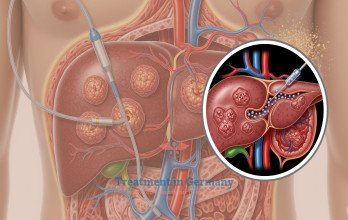
Transarterial chemoembolization (TACE) is a liver-directed treatment that delivers chemotherapy directly to neuroendocrine tumor deposits in the liver and then blocks the blood supply that supports tumor growth. This approach allows high concentrations of the chemotherapy drug to remain within the tumor for a longer period while limiting exposure to healthy tissues. As a result, TACE can achieve much higher drug levels inside the tumor than conventional intravenous chemotherapy [12].

The evidence supporting TACE for neuroendocrine liver metastases is among the strongest for liver-directed therapies. In a 15-year study of 202 patients, TACE achieved disease control for a median of 26 months and was associated with a median overall survival of 5.3 years [11]. International treatment guidelines recommend TACE for selected patients with liver-dominant neuroendocrine tumors who are not candidates for surgery or whose disease has progressed despite systemic therapy.
TACP and TPCE for Advanced Neuroendocrine Tumors
Transarterial chemoperfusion (TACP) is a targeted treatment that delivers chemotherapy directly to the tumor while maintaining blood flow to the surrounding tissue. Because the treated vessels are not blocked, the medication can circulate through the tumor for a longer period, allowing high local drug concentrations with relatively limited effects on the rest of the body. This approach may be considered for patients whose neuroendocrine tumors have progressed despite other treatments or for those who cannot tolerate systemic chemotherapy. Clinical experience suggests that TACP can be repeated at regular intervals and is generally well tolerated in appropriately selected patients. Evidence for TACP is derived mainly from institutional experience and observational studies rather than large randomized clinical trials.

Transpulmonary chemoembolization (TPCE) is a minimally invasive treatment designed for tumors located in the lungs. The procedure delivers chemotherapy directly to lung tumors and then helps retain the medication within the targeted area, increasing local exposure to the drug. TPCE has been explored in selected patients with pulmonary tumor involvement, primarily in specialized centers, but evidence remains limited and its role in neuroendocrine neoplasms has not been established in major treatment guidelines. By concentrating treatment at the tumor site, TPCE aims to improve local tumor control while minimizing exposure to healthy tissues [13].

TIG GmbH can arrange a review of a patient's imaging with the treating specialist and his team to assess whether TACE, TACP, or TPCE is suitable, alongside any standard or immune-based treatment.
Cost of Neuroendocrine Tumor Treatment in Germany
Pricing depends on the therapy, the number of cycles, and the overall plan. German centers combine high clinical standards with transparent costs, which helps patients plan before traveling. The table below sets out the headline figures for the advanced options covered here.

The cost of dendritic cell therapy in Germany is approximately €27,000 for an initial course, delivered by Prof. Gansauge at LDG Laboratories. The interventional procedures, TACE, TACP, and TPCE, typically cost between €8,000 and €9,000 per session with Prof. Vogl and his team. Costs for PRRT, surgery, and targeted therapy depend on the regimen and number of cycles, and a clear estimate should always precede any commitment to travel.
TIG GmbH provides a transparent, personalized breakdown of the full neuroendocrine carcinoma treatment cost before treatment begins, so patients know what to expect with no hidden fees.
Leading Neuroendocrine Tumor Clinics in Germany
Germany is home to several internationally respected neuroendocrine tumor clinics, including European Neuroendocrine Tumor Society centers of excellence. These centers are widely sought by patients looking for experienced hospitals and specialists for neuroendocrine tumor treatment.

TIG GmbH works with these centers and can match each patient to the right neuroendocrine tumor specialists in Germany for their primary site, grade, and stage.
Why International Patients Choose Germany
Germany pairs specialized neuroendocrine expertise with strict medical standards and access to therapies that are limited elsewhere, which makes it a frequent choice for medical tourism for cancer treatment. The same infrastructure supports a broad range of advanced cancer treatment options. A few points are worth weighing before deciding:
Outlook varies widely with grade, stage, and site, so results cannot be guaranteed [1].
Standard therapies like PRRT and somatostatin analogs control the disease well in many patients but rarely cure advanced cases [7].
Immunotherapy works mainly in selected, often higher-grade tumors, while well-differentiated NETs respond less [9].
Dendritic cell therapy is promising but emerging, used alongside standard care rather than as a cure [10].
For an international patient arranging care from abroad, TIG GmbH manages pathology review, specialist matching, visa support, travel, and interpreter services, so patients can focus on treatment and recovery.
Limitations and Considerations of Neuroendocrine Tumor
A clear view of the limits protects patients from false expectations. The options described here carry real constraints:
Most advanced neuroendocrine neoplasms are treatable but not curable, so the goal is control and quality of life [6].
PRRT suits somatostatin-receptor-positive tumors, although disease progression may eventually occur and response duration varies between patients[7].
Immunotherapy benefits a minority, mainly high-grade tumors, and is not effective for everyone [9].
Organ-directed procedures such as TACE, TACP, and TPCE may help control selected tumor deposits within the treated organ, but they generally do not address disease located elsewhere in the body.
Dendritic cell therapy has a strong safety record but limited stand-alone evidence in neuroendocrine disease, and works best in combination but evidence supporting its effectiveness in neuroendocrine tumors remains limited [10].
Any promise of a guaranteed cure is a warning sign, and an independent specialist opinion helps set honest expectations.
Within these limits, the strongest results come from matching each therapy to the tumor's grade, site, and biology, and from treating at a center experienced in this rare disease [1].
Why Patients Worldwide Prefer Our Medical Services in Germany – Key Benefits Explained


References










.webp)
 (1).webp)

.webp)


.jpg)

 (1).webp)


.jpg)