

Vocal cord cancer treatment in Germany including dendritic cell therapy, advanced diagnostics, and complete logistical coordination through Treatment in Germany (TIG).
Vocal cord cancer is a type of laryngeal cancer that develops in the thin, flexible folds of tissue inside the voice box. These vocal folds are responsible for sound production and play an essential role in breathing and swallowing. Because of their delicate structure and constant movement, even small tumors in this region can produce noticeable changes in voice. Early-stage tumors may remain confined to the surface lining, while advanced disease can invade deeper laryngeal structures. Due to its functional importance, preserving both survival and voice quality becomes central to treatment planning.
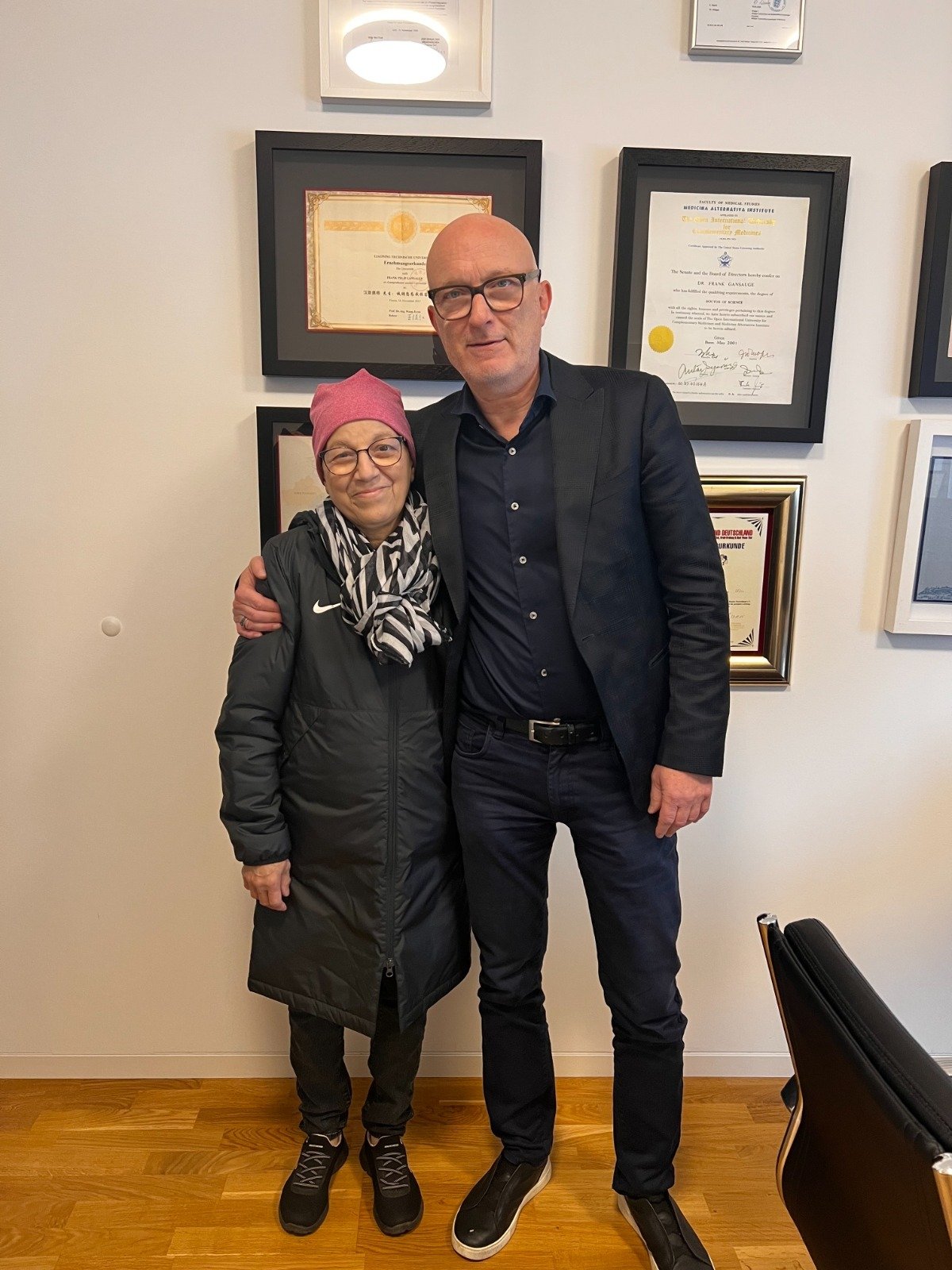
Germany has become a recognized destination for patients exploring new and innovative treatment options for vocal cord cancer, particularly when immune-based therapies are considered. Treatment planning is conducted within specialized German healthcare centers and expert-led German oncology centers, where multidisciplinary tumor boards evaluate each case in detail. Immune-based strategies such as dendritic cell therapy are associated with the clinical expertise of Prof. Gansauge, known for his focused work in advanced cellular immunotherapy. Many international patients seek evaluation in Germany because of structured treatment pathways, coordinated clinical oversight, and access to latest medical technology in Germany.

Vocal cord cancer most commonly originates from squamous cells lining the larynx. These cells may undergo malignant transformation due to long-term exposure to irritants such as tobacco smoke or alcohol. Chronic inflammation and environmental factors can also contribute to cellular mutation. In early stages, the tumor is often localized and limited to one vocal fold. If untreated, it may extend into surrounding tissues or lymph nodes.
Because the vocal cords are directly involved in speech, early tumors frequently cause symptoms that prompt evaluation. This allows earlier detection compared to some deeper organ cancers. However, precise staging is still required to determine treatment intensity and preserve function.

The most common early symptom of vocal cord cancer is persistent hoarseness lasting longer than two to three weeks. Patients may notice a change in voice tone, reduced vocal strength, or vocal fatigue during prolonged speaking. Since hoarseness is common with infections, symptoms are sometimes ignored initially. However, persistent voice changes require structured evaluation.
Advanced disease may cause difficulty swallowing, throat discomfort, chronic cough, or breathing difficulties. If the tumor grows significantly, airway obstruction may occur. Early recognition significantly improves the likelihood of preserving normal voice function.
Advanced Diagnostics for Vocal Cord Cancer in Germany
Accurate diagnosis begins with laryngoscopy, a procedure that allows direct visualization of the vocal folds. Suspicious areas are biopsied to confirm malignancy and determine histological subtype. Following tissue confirmation, staging is performed using advanced Diagnostics. Imaging techniques such as CT scans, MRI, and PET scans help evaluate tumor depth, lymph node involvement, and possible spread beyond the larynx. These diagnostic methods are supported by latest medical technology in Germany, ensuring high-resolution anatomical mapping. Findings are reviewed collectively within multidisciplinary tumor boards at German Oncology centers, allowing individualized and coordinated planning.

Immunotherapy represents a modern strategy in the management of selected head and neck cancers. The dendritic cell vaccine approach is designed to stimulate the immune system to recognize tumor-associated antigens present on vocal cord cancer cells. Since certain tumors may suppress immune detection, immune activation strategies aim to strengthen the body’s natural surveillance mechanisms. This therapy is evaluated within structured oncology programs for carefully selected patients.
The process begins with the collection of immune cells (monocytes) from the patient’s blood under medical supervision. These cells are isolated in a sterile clinical environment to preserve viability and biological function. Careful monitoring ensures patient stability during collection. Proper handling and immediate transfer to laboratory processing are essential to maintain quality standards.
Collected cells are transferred to an EU GMP certified laboratory, where they are cultured under strictly regulated conditions. Within this controlled environment, the monocytes are exposed to tumor-associated antigens derived from vocal cord cancer tissue. This exposure supports their development into active dendritic cells capable of presenting cancer markers to T-cells. Extensive sterility, purity, and viability testing is performed before administration.
Once prepared, the cells are reintroduced into the patient as a personalized immune-based therapy, commonly referred to as a dendritic cell vaccine. This therapy is integrated alongside surgery or radiation rather than replacing them. Continuous monitoring evaluates immune response, tolerance, and clinical stability. The cost of Dendritic Cell Therapy in Germany is €27,000, covering immune cell collection, laboratory processing, preparation, and administration.
Combining Modern Treatment Strategies in Germany
Vocal cord cancer treatment often includes surgery or radiation therapy depending on stage and tumor location. In early stages, organ-preserving techniques aim to maintain voice quality. Advanced disease may require combined modalities for optimal control. Immune-based therapy may be considered in selected cases as part of a comprehensive plan. Multidisciplinary coordination within German healthcare centers ensures that oncologic control and functional preservation remain balanced. Continuous imaging reassessment supports adaptive management.
Patients with recurrent or advanced disease may be evaluated for participation in new Clinical Trials for Vocal Cord Cancer in Germany. These research programs investigate emerging immunotherapies and targeted approaches under strict ethical oversight. Clinical research standards align with international guidelines referenced by the Canadian Cancer Society, emphasizing safety and evidence-based methodology. Eligibility requires structured evaluation within accredited German oncology centers. Participation provides access to evolving treatment strategies under regulated supervision.

Not all patients are candidates for immune-based therapy. Suitability depends on tumor stage, immune competence, and overall health stability. Early-stage disease may be effectively managed with surgery or radiation alone.
Financial planning is important, as advanced immunotherapy involves defined costs. Continuous monitoring through imaging and clinical assessment remains essential throughout treatment. Management focuses on disease control while preserving speech and airway function.
Access to advanced management for Vocal Cord Cancer involves more than clinical decision-making; it requires careful logistical coordination, especially for international patients seeking specialized therapies such as Immunotherapy Dendritic cell therapy. Through Treatment in Germany (TIG), medical documentation is reviewed in advance to facilitate appropriate specialist referral and structured treatment planning within experienced oncology centers. This pre-evaluation by the treating physician helps align the patient’s clinical condition with available therapeutic options before travel arrangements are finalized.
Treatment in Germany (TIG) at www.treatmentingermany.de provides comprehensive logistical assistance, including hospital coordination, appointment scheduling, travel planning, and medical visa support when required. By organizing these administrative components in advance, patients can focus on clinical evaluation and multidisciplinary consultation upon arrival. Individuals considering advanced and Innovative treatment approaches may get a free consultation with TIG (Treatment in Germany) to receive structured guidance and coordinated access to specialized cancer programs in Germany.
🌍Why Patients Worldwide Prefer Our Medical Services in Germany – Key Benefits Explained:


Vocal cord cancer is a malignant tumor that develops in the vocal folds of the larynx. It can affect speech, breathing, and swallowing.
Persistent hoarseness lasting more than two weeks is the most common early sign. Any unexplained voice change should be evaluated.
Early-stage disease may be treated with curative intent. Advanced cases focus on disease control and functional preservation.
It is an immune-based treatment that enhances recognition of tumor cells. It is integrated alongside conventional therapies.
Some patients may qualify for new Clinical Trials for Vocal Cord Cancer in Germany. Eligibility depends on stage and prior treatments.
No, immunotherapy is usually combined with standard treatments. It is not a standalone replacement.
Dendritic cell therapy in Germany lacks FDA approval in the USA for vocal cord cancer, but in Germany, it is approved under EU-GMP standards for safety.
In many early-stage cases, voice preservation is possible. Treatment planning aims to maintain speech quality whenever feasible.
Smoking and heavy alcohol consumption significantly increase risk. Chronic vocal cord irritation may also contribute.
International patients can contact TIG, (Treatment in Germany) at www.treatmentingermany.de which manages complete logistical arrangements including a medical visa support if required.
Kindly complete the form below, and our dedicated team will reach out to you promptly. We look forward to connecting with you soon!
Trierer Straße, 56072 Koblenz, Germany

Our benefits:
.webp)
 (1).webp)
.webp)
 (1).webp)
.jpg)